2017 Mazda3 · US · Tires and pressure
Check cold tire pressure
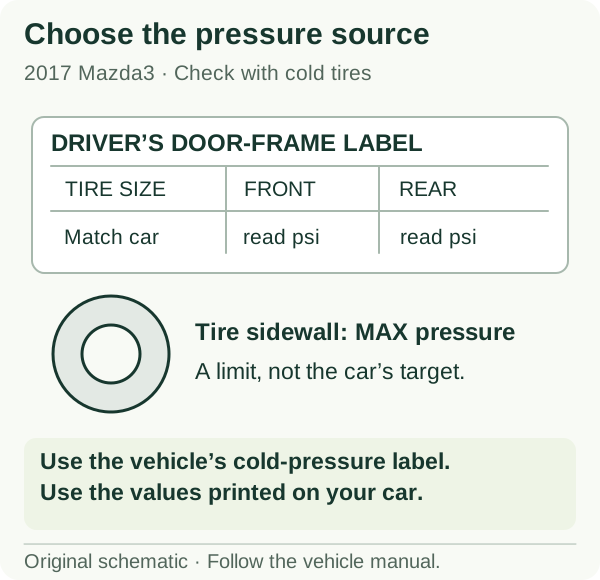
Use the vehicle’s pressure label, not the maximum printed on the tire.
1 Confirm your vehicle
For 2017 Mazda3 · US, SKYACTIV-G 2.0 / 2.5 gasoline. Confirm the original component against the cited manual.
Select and confirm your vehicle before starting.
Help identify your model and equipmentWhat is excluded?
- Other model years and markets; imported Axela or diesel models; modified or aftermarket components with a different procedure.
- Snow-tire setup: the manual has additional pressure instructions on printed p.3-49; have that setup confirmed before using a standard label-only target.
2 Prepare
You can save preparation while your vehicle or equipment is still unconfirmed.
YOUR OBSERVATIONS
Keep the before and after.
Copy each real label target and cold gauge reading by wheel position, including any separate spare specification and initialization result.
At the next comparable cold check, does a tire need air again, and has the TPMS warning returned?
3 Follow the steps
Confirm compatibility and choose the readiness branch before recording steps.
4 Check the result
- What was verified after measuring / adjusting?
- Cold pressures match the vehicle label, caps secure; any required TPMS follow-up identified
- Record only the result you actually observed. A saved web checklist is not confirmation that a vehicle has been repaired.
- Were all road tires checked against the actual label, and was required initialization confirmed after adjustment?
- At the next comparable cold check, does a tire need air again, and has the TPMS warning returned?
Select what you actually observed. If you have only prepared the plan, record that instead.
Stop and get help if
- A tire is flat, damaged, repeatedly losing air or the label is unreadable
- Damage, recurring pressure loss or a missing specification: arrange tire inspection; do not drive on a flat tire.
- A part, label, connector or fastener differs from the cited manual; access requires raising the vehicle; you cannot identify the correct component.
Source & applicability
- 2017 Mazda3 Owner’s Manual — Tires, printed pp.6-40–6-43
PDF page 453 · Source checked 2026-10-04
- 2017 Mazda3 Owner’s Manual — Cold Tire Pressure Conditions, printed p.7-33
PDF page 520 · Source checked 2026-10-04
- 2017 Mazda3 Owner’s Manual — TPMS Initialization, printed p.4-154
PDF page 285 · Source checked 2026-10-04
- 2017 Mazda3 Owner’s Manual — Winter Driving and Snow Tires, printed p.3-49
PDF page 126 · Source checked 2026-10-13
- 2017 Mazda3 Owner’s Manual — US Tire Placard and Cold Pressure, printed p.8-30
PDF page 563 · Source checked 2026-10-13
- 2017 Mazda3 Owner’s Manual — US Tire Sidewall Markings, printed p.8-27
PDF page 560 · Source checked 2026-10-13
- 2017 Mazda3 Owner’s Manual — Tire Pressure and Repeated Inflation, printed p.6-41
PDF page 454 · Source checked 2026-10-13
- 2017 Mazda3 Owner’s Manual — US Tire Pressure and Sidewall Inspection, printed p.8-31
PDF page 564 · Source checked 2026-10-13
Original, AI-assisted plan based on owner-manual facts. No physical repair test or manufacturer endorsement is claimed. Content version 2.0.0.
All observation paths
Has the vehicle been parked for at least three hours, with undamaged standard road tires and a readable pressure label?
- Yes — ready for this check: Continue with the steps, stopping if the real component differs from the manual.
- Not yet / not sure: Preparation saved. Return when the condition is confirmed; leave the vehicle untouched.
- A tire is flat, damaged, repeatedly losing air or the label is unreadable: Damage, recurring pressure loss or a missing specification: arrange tire inspection; do not drive on a flat tire.
What was verified after measuring / adjusting?
- Cold pressures match the vehicle label, caps secure; any required TPMS follow-up identified: Were all road tires checked against the actual label, and was required initialization confirmed after adjustment?
- Damage, recurring pressure loss or a missing specification: arrange tire inspection; do not drive on a flat tire.: Damage, recurring pressure loss or a missing specification: arrange tire inspection; do not drive on a flat tire.
- I have only prepared the plan: Plan prepared; no physical maintenance result recorded.
Were all road tires checked against the actual label, and was required initialization confirmed after adjustment?
- All applicable readings and initialization recorded; no damage or loss: Cold pressures match the vehicle label, caps secure; any required TPMS follow-up identified
- The observation or repeat check is still incomplete: Plan prepared; no physical maintenance result recorded.
- A tire loses air again, warning persists or a specification is uncertain: Damage, recurring pressure loss or a missing specification: arrange tire inspection; do not drive on a flat tire.
All observation paths
Has the vehicle been parked for at least three hours, with undamaged standard road tires and a readable pressure label?
- Yes — ready for this check: Continue with the steps, stopping if the real component differs from the manual.
- Not yet / not sure: Preparation saved. Return when the condition is confirmed; leave the vehicle untouched.
- A tire is flat, damaged, repeatedly losing air or the label is unreadable: Damage, recurring pressure loss or a missing specification: arrange tire inspection; do not drive on a flat tire.
What was verified after measuring / adjusting?
- Cold pressures match the vehicle label, caps secure; any required TPMS follow-up identified: Were all road tires checked against the actual label, and was required initialization confirmed after adjustment?
- Damage, recurring pressure loss or a missing specification: arrange tire inspection; do not drive on a flat tire.: Damage, recurring pressure loss or a missing specification: arrange tire inspection; do not drive on a flat tire.
- I have only prepared the plan: Plan prepared; no physical maintenance result recorded.
Were all road tires checked against the actual label, and was required initialization confirmed after adjustment?
- All applicable readings and initialization recorded; no damage or loss: Cold pressures match the vehicle label, caps secure; any required TPMS follow-up identified
- The observation or repeat check is still incomplete: Plan prepared; no physical maintenance result recorded.
- A tire loses air again, warning persists or a specification is uncertain: Damage, recurring pressure loss or a missing specification: arrange tire inspection; do not drive on a flat tire.